







What to know before buying a hot tub:
Hot tub connection is often carried out once the unit has been delivered and placed in its final location. However, depending on the type of base, electrical planning must be carried out beforehand.
If the hot tub is installed on:
- a concrete slab
- paving stone
- any other solid base
the electrical conduit must be installed before the surface is poured or laid. This allows the power supply to be routed under the spa rather than to the side, for a more discreet and professional installation.
If the base is made of rock dust or compacted gravel, the cable can be laid after installation, since it can be dug out for routing.
Technical requirements:
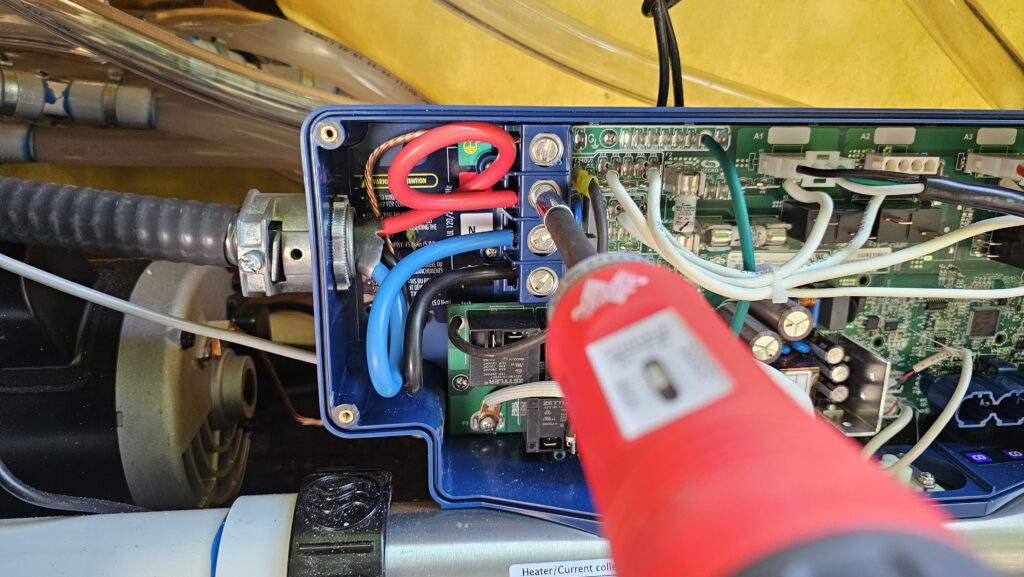
A hot tub connection generally includes:
- a dedicated 120/240V circuit with 20 to 60 amperes
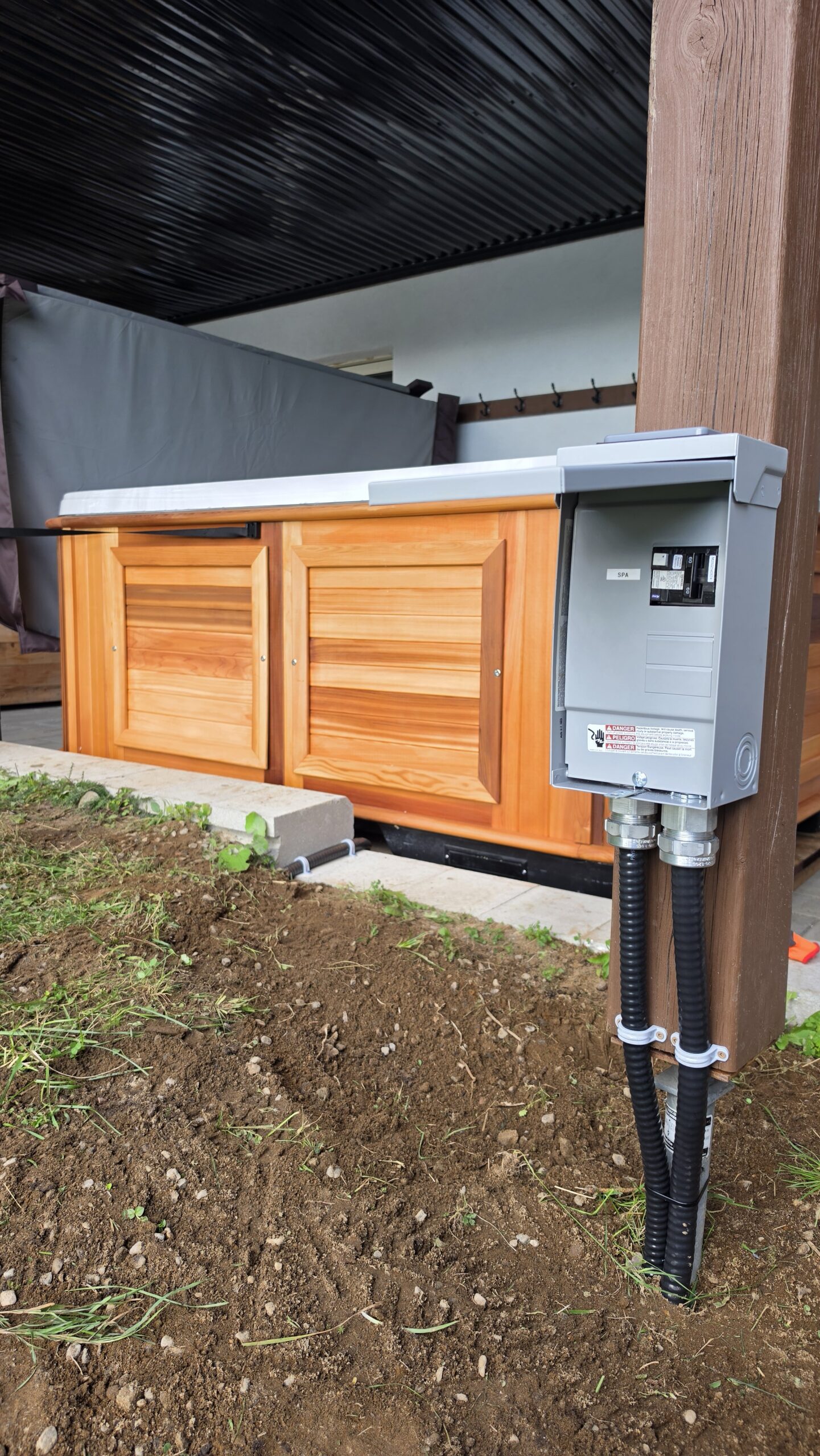
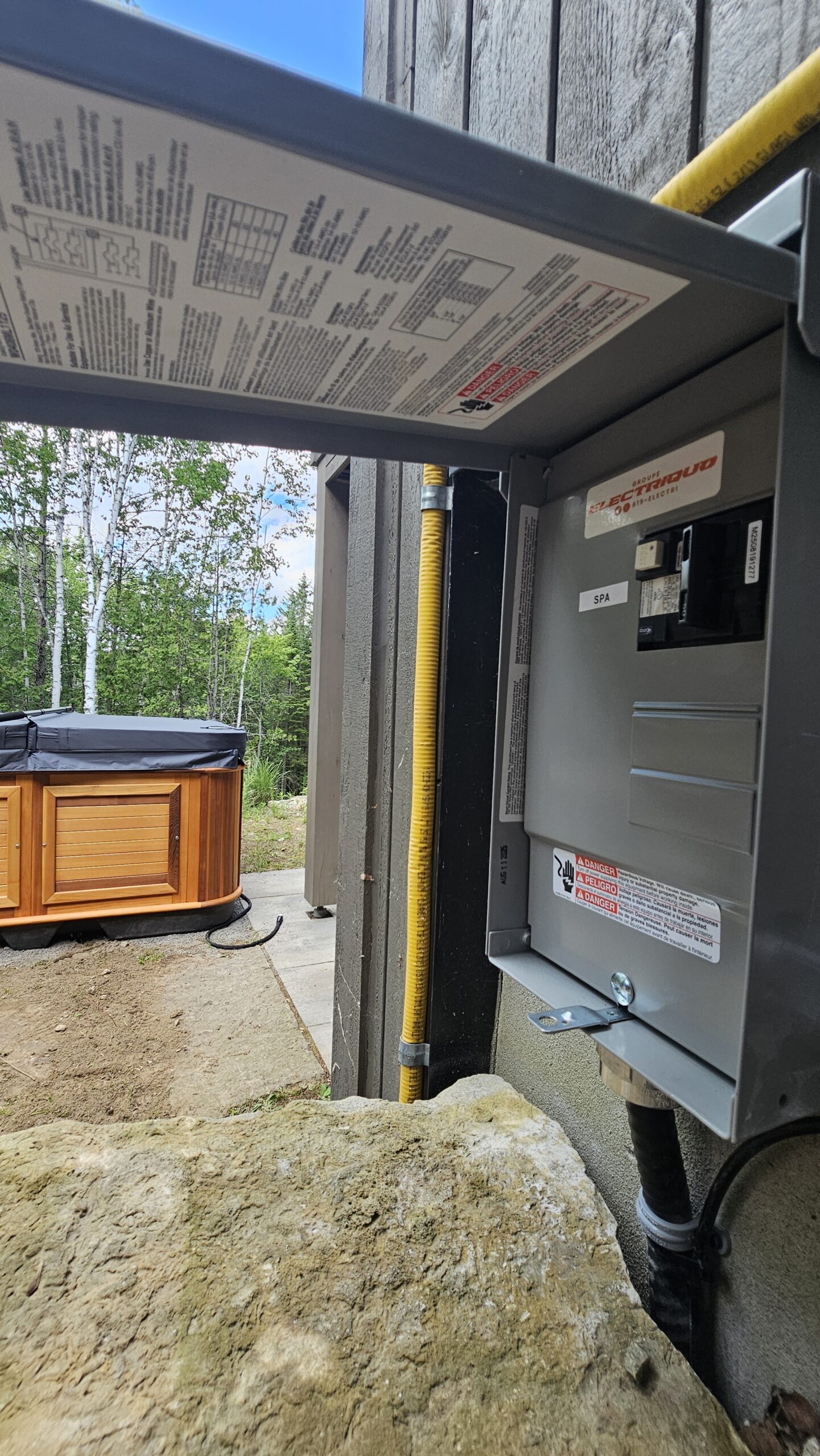
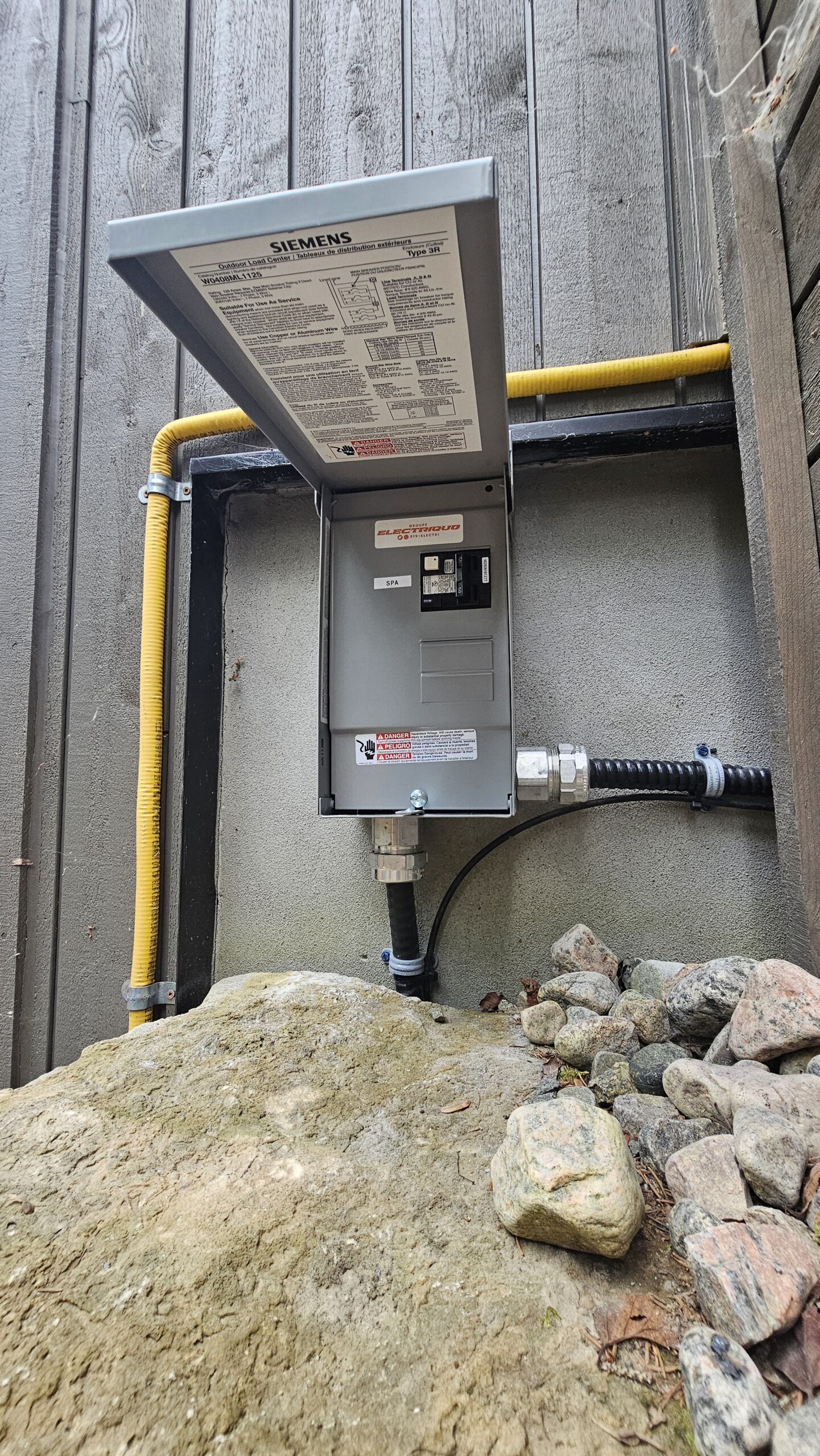
- a small electrical box near the spa
- in the latter, a ground fault circuit interrupter (GFCI)
Main electrical panel capacity:
In some cases, an upgrade of the electrical panel may be necessary, particularly if:
- the panel is already fully charged
- it’s a panel with a capacity below 200A
- several energy-intensive devices have already been installed
Safety and compliance:
A hot tub contains a large quantity of water and is used barefoot, often on a wet surface. This combination demands maximum protection. Inadequate installation can present a real risk of electrocution.
Code sections 68-068 and 68-404 stipulate the location of the disconnect box containing the GFCI circuit breaker:
The GFCI interrupter must be installed at least 1,5 meters from the spa AND must be visible from the hot tub.
FAQs
Plug-and-play 120V hot tubs do exist, but a dedicated circuit is required.



