






Highly energy intensive, an EV charger must be connected without any errors.
Installing an electric vehicle charger is straightforward. However, to ensure a safe, reliable setup tailored to your specific needs, several factors must be taken into account. The capacity of your electrical panel, the vehicle’s specifications, the type of wiring, and the location of the charger all influence the choice of equipment and the complexity of the installation work.
Unlike many other high-energy appliances that are used only intermittently, an EV charger operates for several consecutive hours. This characteristic requires extra attention to the quality of the electrical connections. Every connection must be made in accordance with the manufacturer’s requirements – specifically by adhering to the specified tightening torque. An improper connection can lead to overheating and compromise the safety of the installation.
Choosing the right power level for your vehicle
Not all electric vehicles have the same charging requirements. A vehicle with a large battery – such as a Ford F-150 Lightning or a Rivian -may require a higher power level to achieve a reasonable charging time. Conversely, an electric vehicle with a regular battery capacity or a plug-in hybrid vehicle can meet its needs with a lower power level.
Electrical Panel Capacity Management
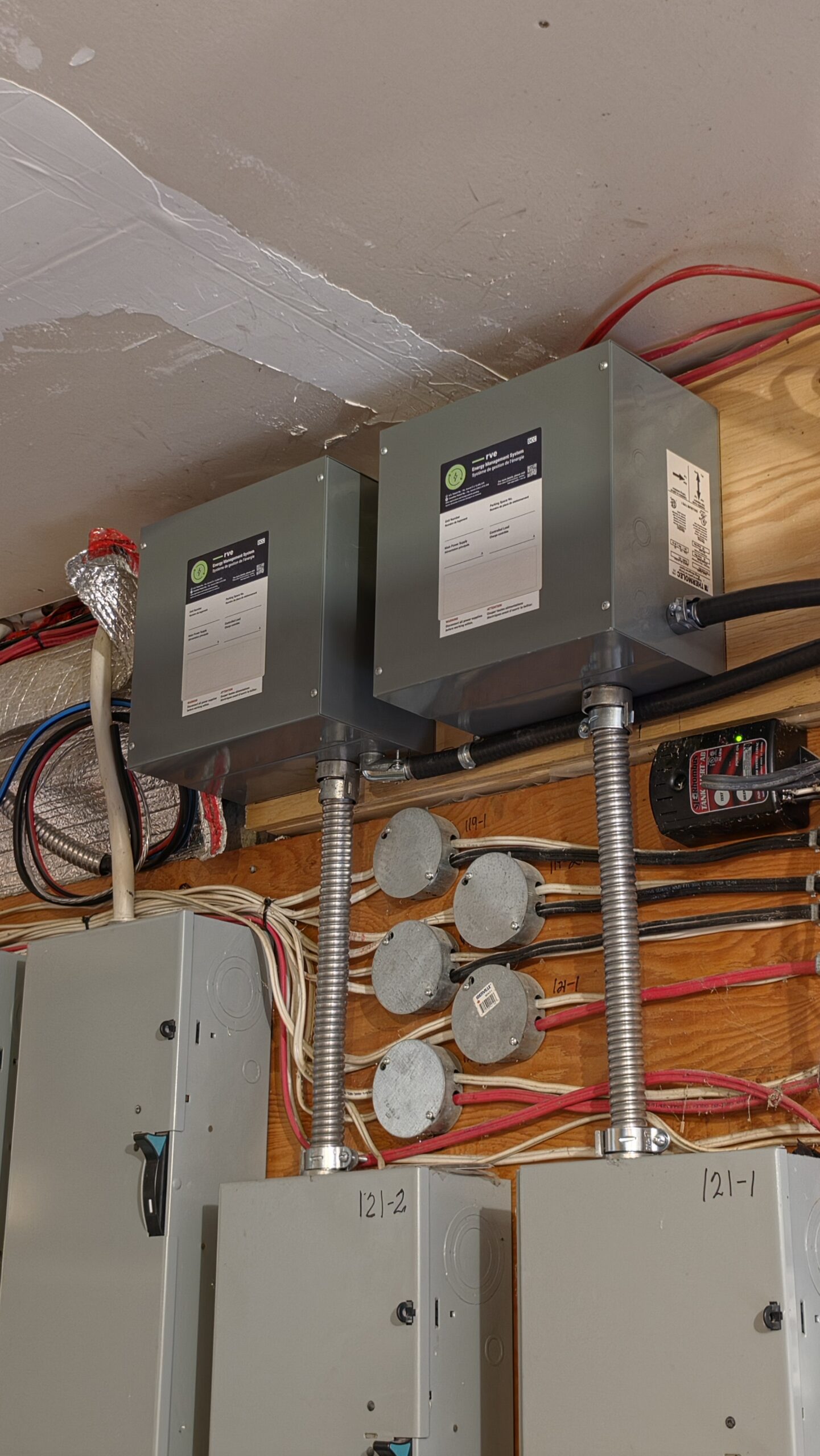
In some homes – particularly those with an electrical service of 200 amps or less that already have several high-draw appliances – adding an EV charger station may require a load-shedding module. This device monitors the home’s total electrical load and automatically adjusts or temporarily interrupts power to the charger whenever the available capacity becomes insufficient.
Among the available solutions, RVE’s DCC modules are a proven option. However, depending on the site configuration and future needs, it may sometimes be more cost-effective to upgrade the home’s electrical service capacity instead.
EVduty solutions are another good option. Their smart current sensor monitors the home’s electricity consumption in real time, allowing their compatible EV charger to automatically adjust its charging power based on the available capacity. This approach can be a budget-friendly solution.
Types of pedestal
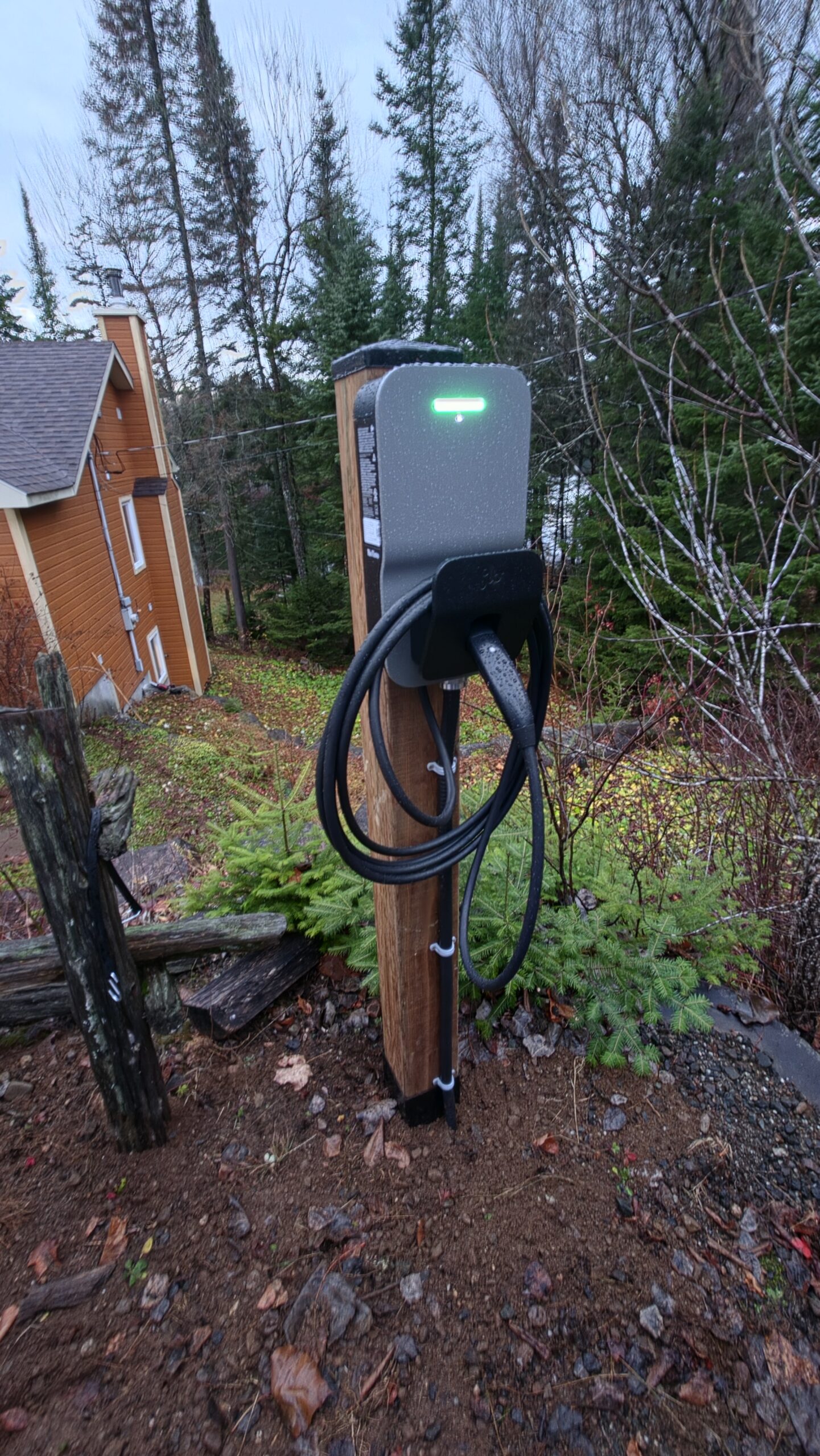
When the parking area is located some distance from the home, a pedestal is required to position the EV charger in a convenient spot.
A wooden pedestal is the most economical choice. At Groupe ELECTRIQUO, we prefer using a 6×6 post, mounted on a metal ground spike and topped with a black cap, resulting in a setup that is both functional and neat.
For a more premium finish, aluminum pedestals offer a modern look and a more rigid structure. Their installation, however, requires two separate visits: the first to prepare and pour a concrete base, and the second to install the pedestal and the EV charger once the base is ready.
Hardwired charger or plug-in outlet?
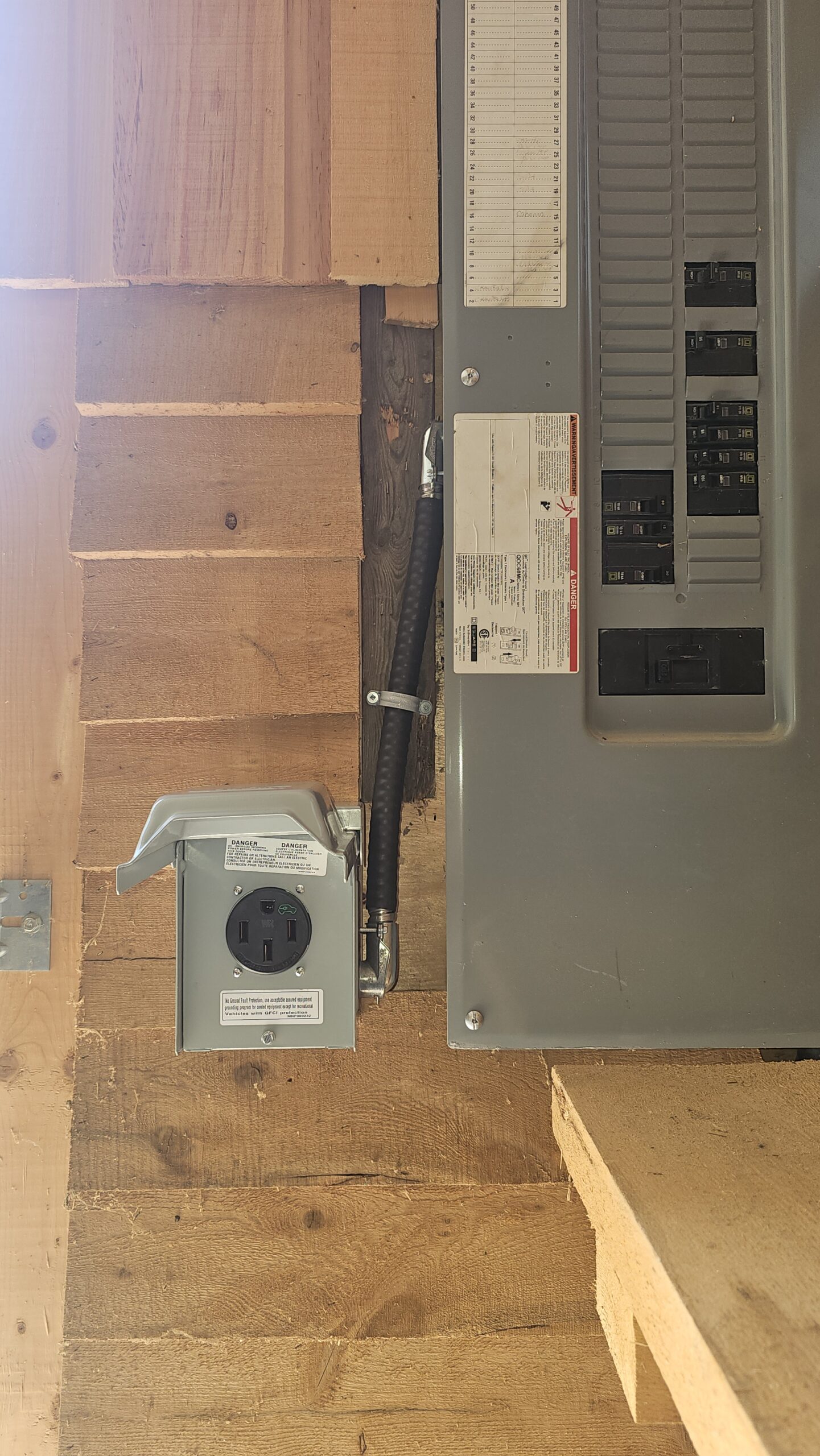
In some situations, installing a 240 V outlet – such as a NEMA 14-50 or 6-50 – can be a good option, especially if you already own a compatible portable charger or want the flexibility to move your equipment.
However, if the EV charger is intended to remain in a fixed location, we recommend a hardwired connection. This setup eliminates the plug-in connection between the charger and the outlet, thereby reducing risks related to contact wear, improper connection, or corrosion over time. A hardwired installation is therefore the preferred choice for a permanent and durable solution.
Approximate charging time based on electrical circuit capacity
| Amperage | Approx. power (240V) | Minimum breaker | Approx. time |
|---|---|---|---|
| 16A | 3.8kW | 20A | ~16 hours |
| 24A | 5.8kW | 30A | ~10 hours |
| 32A | 7.7kW | 40A | ~8 hours |
| 40A | 9.6kW | 50A | ~6 hours |
| 48A | 11.5kW | 60A | ~5 hours |
To learn about the initiatives and subsidies offered, consult Transition Énergétique Québec.
We use high-quality materials to guarantee the weathertightness, durability and performance of your installation… thus avoiding a future service call.


