

Residential and commercial surge protector installation in the Laurentides.
24/7 contact:
E-mail to INFO@ELECTRIQUO.COM or phone at 819-353-2874 (819-ELECTRI).
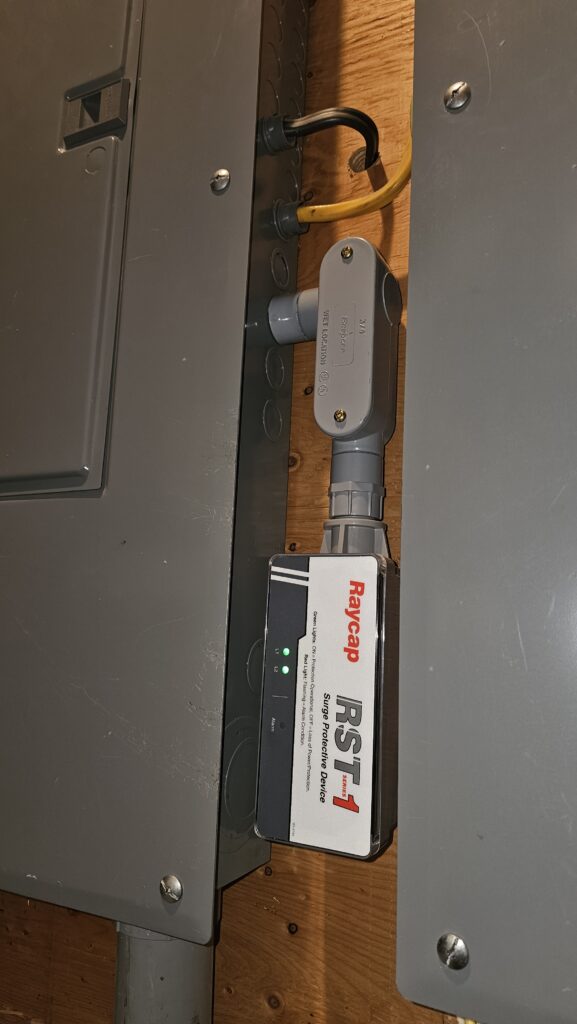
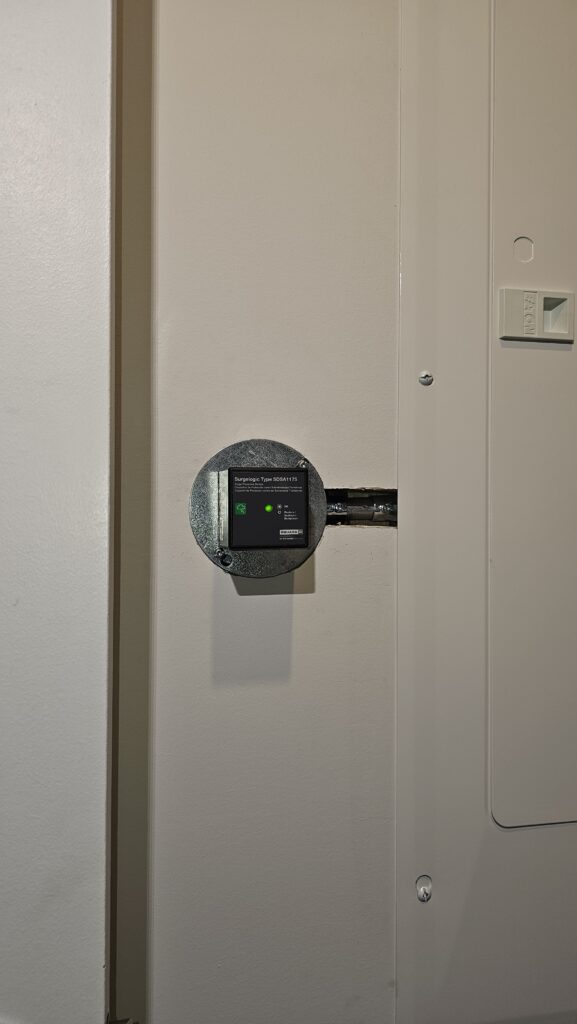
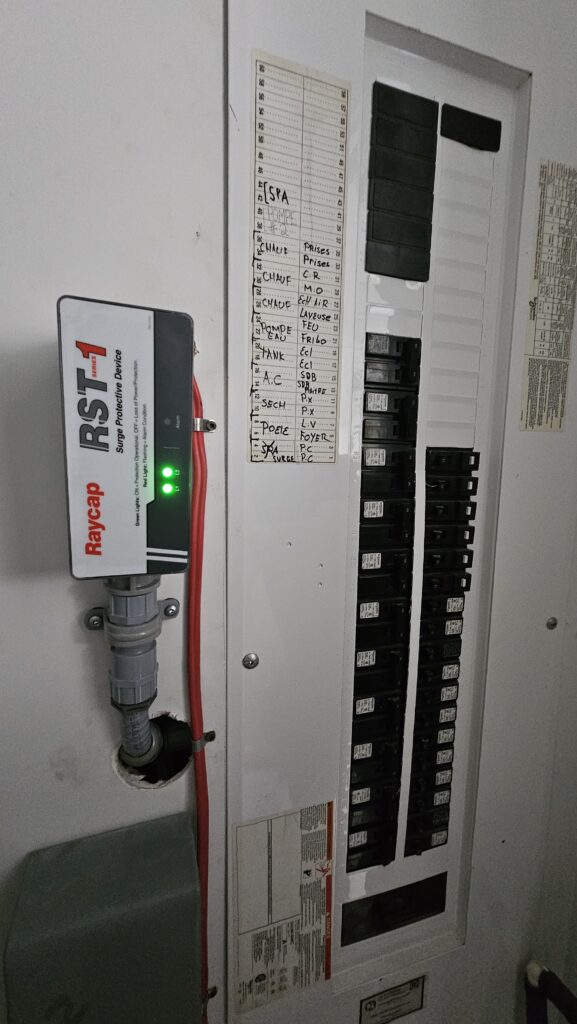
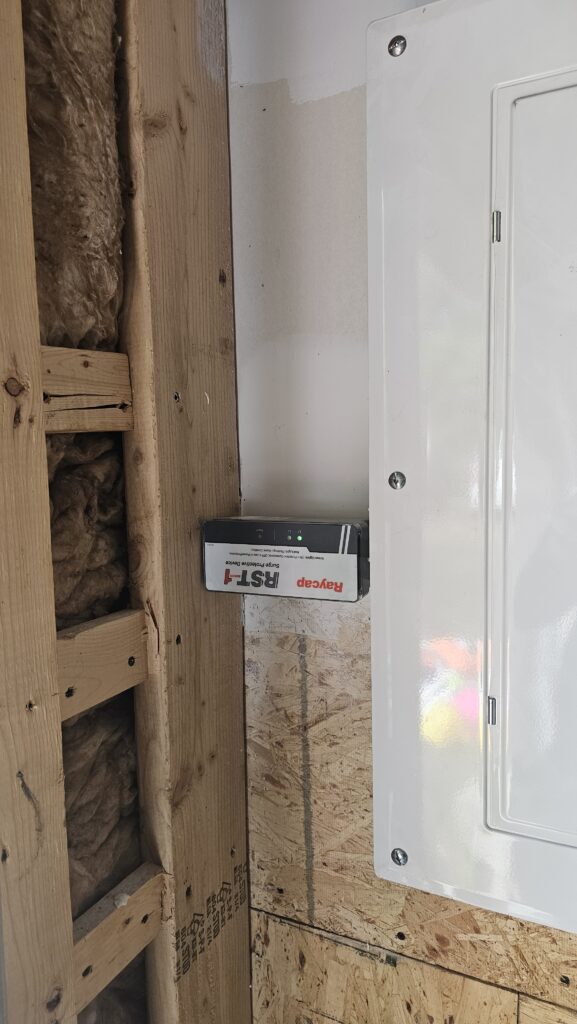
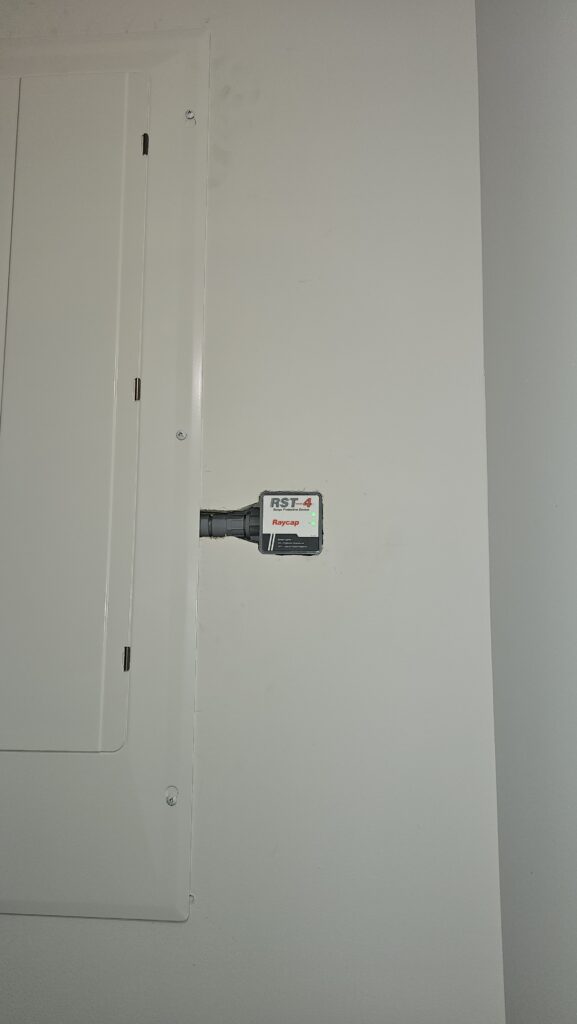
We offer surge protector installation in the Laurentides to protect your electronic devices.
A power surge can occur during a lightning strike or when power is restored following a blackout. When Hydro performs switching maneuvers, these operations can generate very rapid, high voltage spikes that propagate through your installation.
Directly from the Hydro-Québec website, they quote:
Even if the damage was caused by electricity, Hydro-Québec is not necessarily liable.
Unless there is gross negligence or intent, Hydro-Québec does not pay compensation for broken equipment. We recommend that you contact your insurer in such cases.
Examples of situations in which Hydro-Québec cannot be held liable for damages:
- weather event (e.g., thunderstorm) ;
- voltage or frequency variation or loss – it’s your responsibility to protect your electrical installation and electronic devices against this type of variation, using surge bars for example;
- interruption of service due to an emergency, accident, equipment failure or tripping of the system’s protective equipment;
- interruption of service or delivery of electricity for maintenance, repair, modification or management of the network, or for public service or public safety purposes.
Operating principle:
A surge suppressor acts like a shield, absorbing spikes in electrical voltage to protect your sensitive equipment.
Its role is to maintain tension at a safe level. Here’s how it works:
- Passive mode: As long as the voltage is stable (e.g. 240V), the surge suppressor lets the current pass through without intervening.
- Peak detection: As soon as an overvoltage occurs (storm, network problem), internal components called metal-oxide varistors (MOVs) become electrical conductors.
- Detour: The varistor absorbs excess energy and instantly redirects it to ground, preventing the discharge from reaching your devices.
- Immediate reaction: Unlike a standard circuit breaker, the surge suppressor reacts in nanoseconds.
A surge suppressor is a perishable component. Every shock it absorbs degrades its components.
Most models have an indicator light to show whether the protection is still active. If this light goes out or changes color, the surge protector usually needs to be replaced.
For a surge suppressor to be most effective, it should be installed with very short wires and, ideally, as close as possible to the main circuit breaker. The longer the conductors, the more impedance they add, which reduces the speed and effectiveness of protection in the event of a power surge. A short, direct installation close to the electrical input therefore improves the surge suppressor’s actual performance.
The magnitude of a power surge is impossible to predict accurately. Even a very robust residential surge arrester, say 130 kA, cannot guarantee absolute protection against all possible events. It greatly reduces the risk, but an exceptional surge may still exceed its capacity.
Thank you for trusting us with your surge protection installation in the Laurentides!